1
Grow
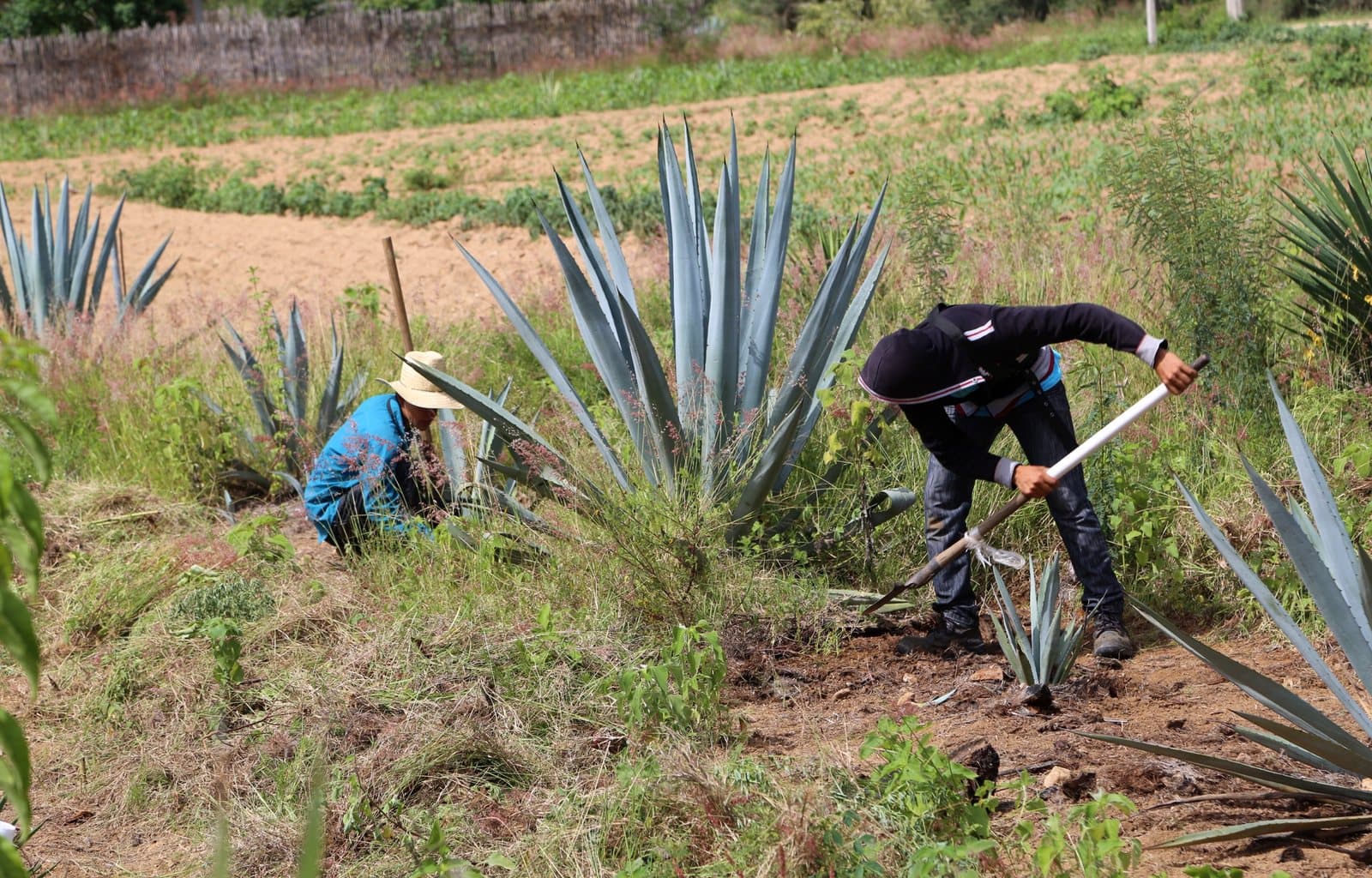
6 to 25+ years
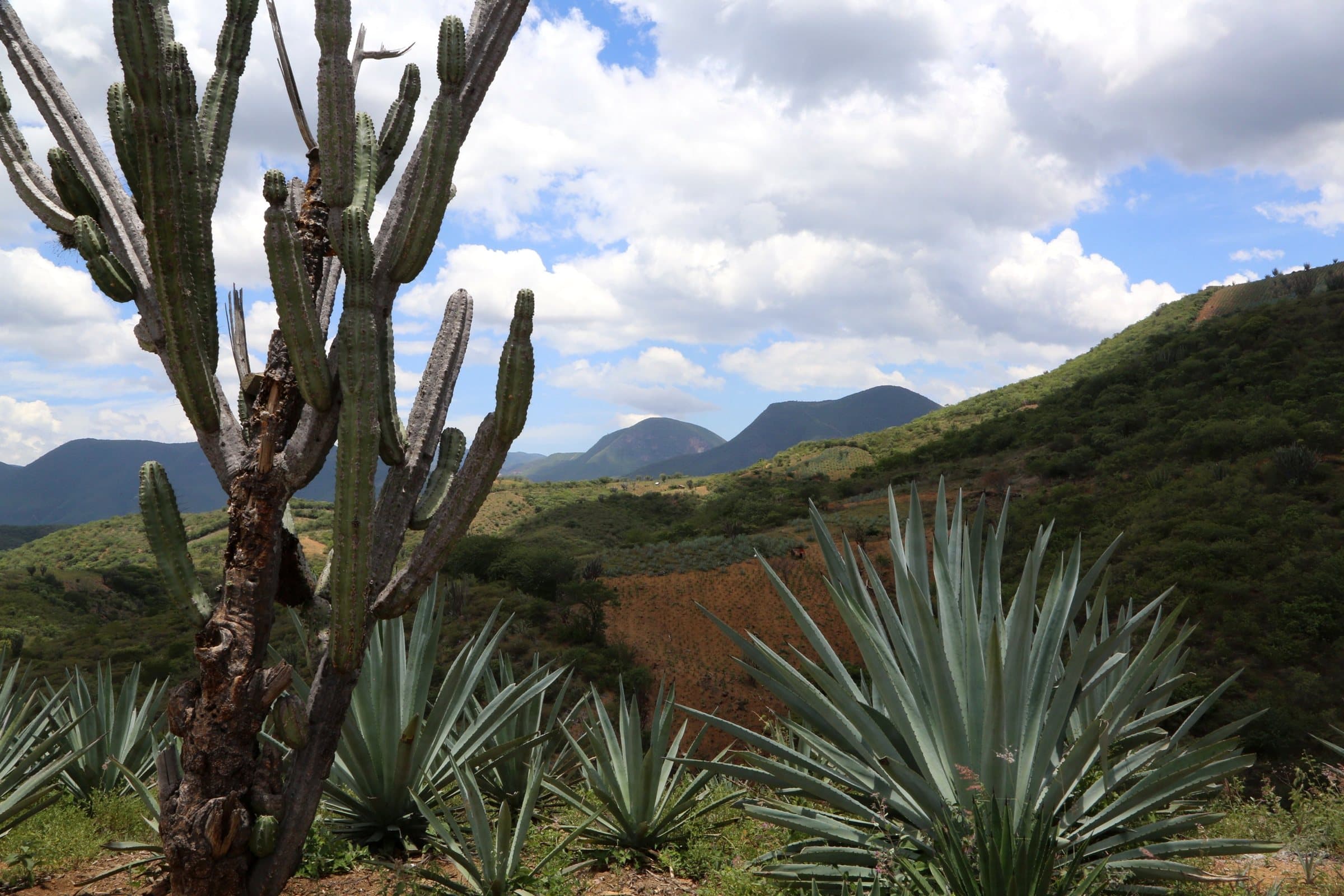
The agave stores sugar in its heart until it is ripe. It is harvested once and does not regrow. Time in the field is the biggest cost in every bottle.

The Mr. Mezcal Guide
What mezcal is, how it is made, and why no two bottles taste alike.
The basics
Mezcal is Mexico’s original agave spirit: the roasted heart of the agave plant, fermented and distilled. The name comes from the Nahuatl mexcalli, “oven-cooked agave.” Tequila began as one regional style of it.
Agave, by law. Since the 2016 standard, anything labeled mezcal must be made from agave and nothing else.
Comes from Oaxaca. 89.47% of certified mezcal in 2025. The protected origin covers nine core states.
Agave species, roughly. Tequila may use only one. Espadín alone is about 85% of all mezcal.
Alcohol by volume. The legal range. All four Mr. Mezcal expressions are bottled at 42%.
Is Mezcal Artesanal. That is Mr. Mezcal’s category. And 95.5% is joven: clear and unaged.
Sources: COMERCAM, Informe Estadístico 2026 (2025 data); NOM-070-SCFI-2016.
The plant. Mezcal tastes of its agave. Different species give different flavors, and some take 25 years to grow.
The fire. The agave is roasted underground over wood and hot stones. That is where the smoke comes from.
The hands. Most mezcal is made in small batches by families at a palenque, not in a factory.
How mezcal is made · the traditional method
Six steps, done by hand at the palenque. This is how Mr. Mezcal is made, and it is why mezcal tastes the way it does.
6 to 25+ years
The agave stores sugar in its heart until it is ripe. It is harvested once and does not regrow. Time in the field is the biggest cost in every bottle.
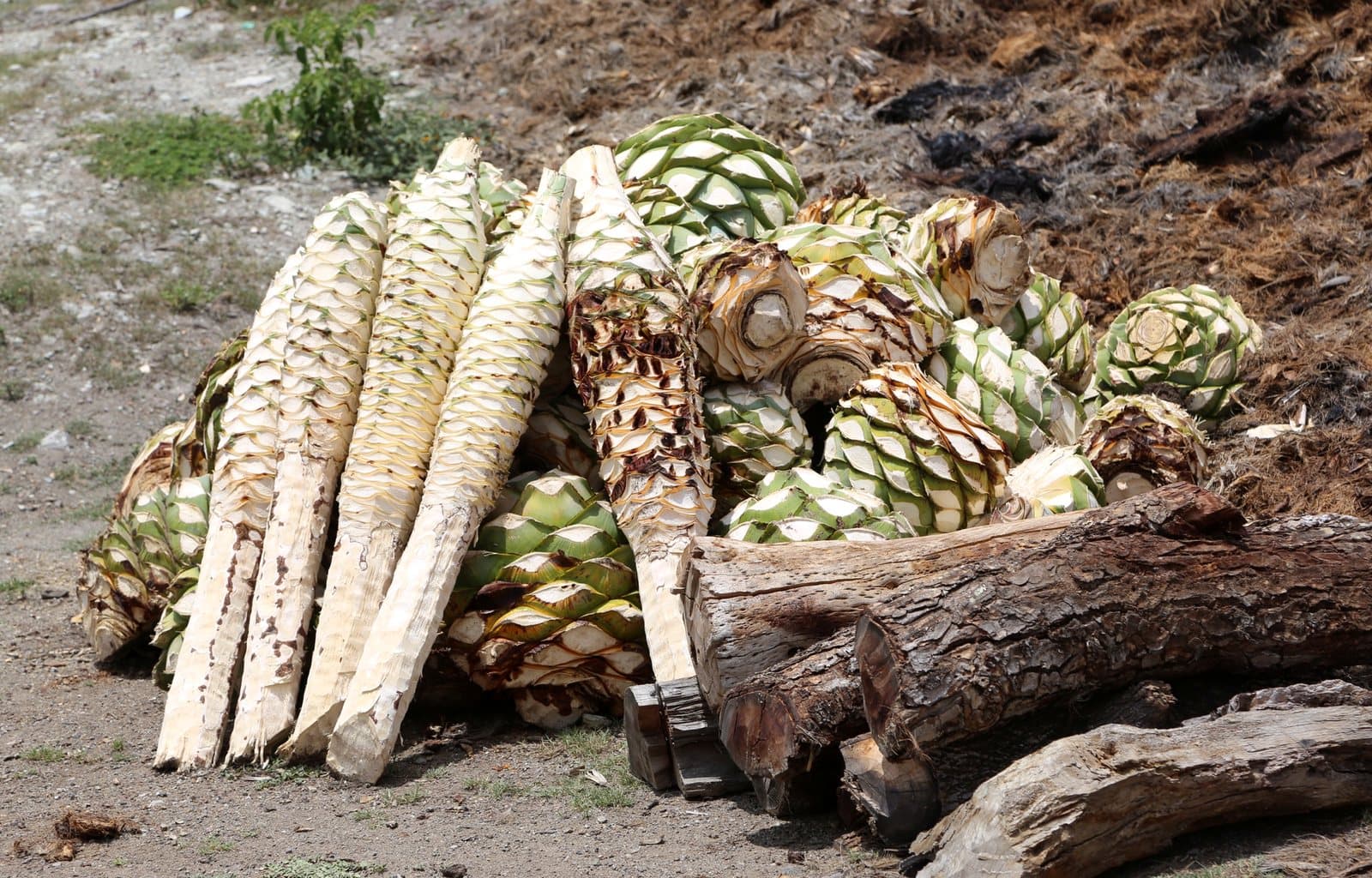
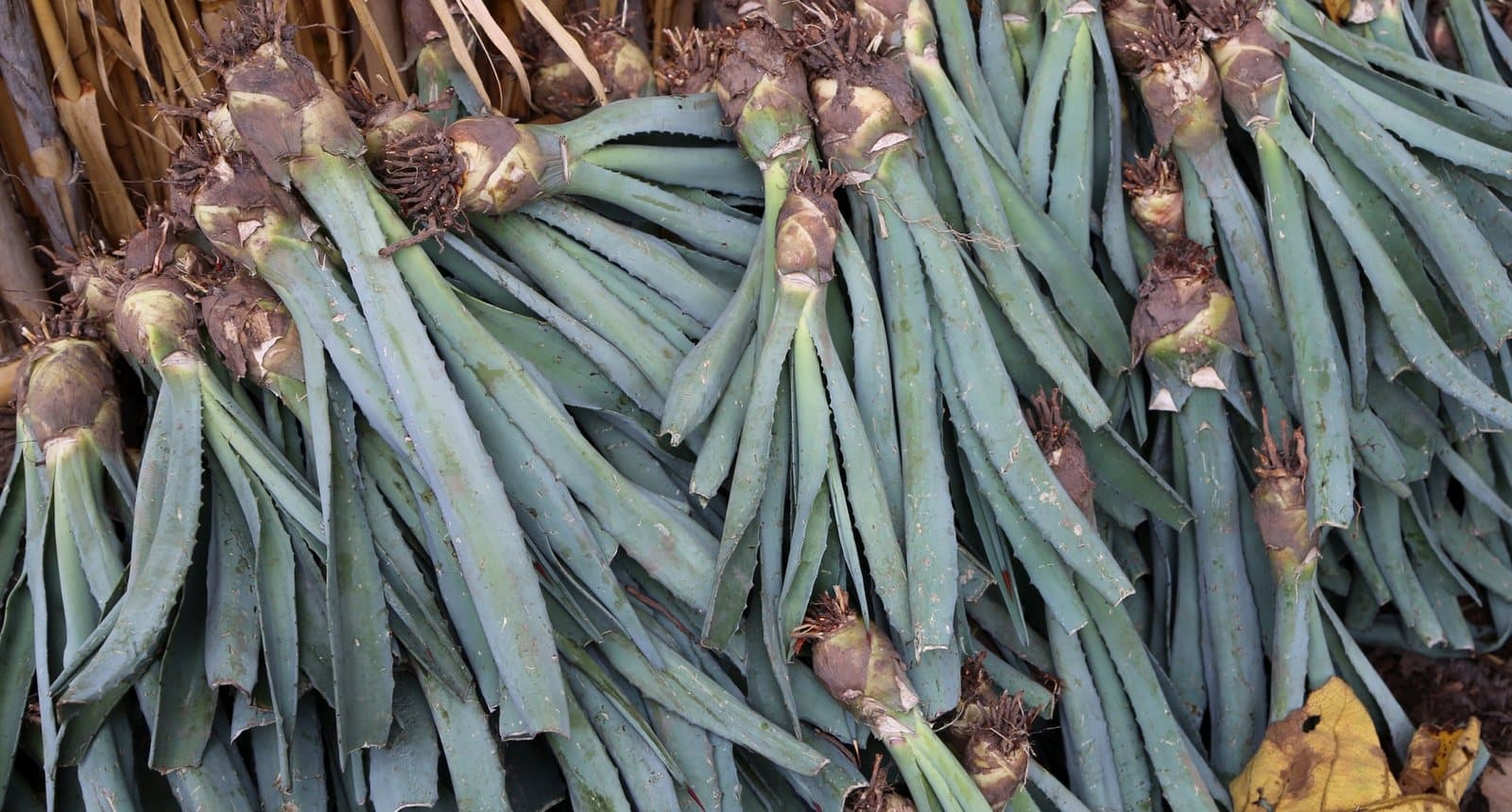
by hand
A cutter trims off the leaves with a machete or a coa, leaving the heart, called the piña. The round ones come from agaves like Espadín. The long ones are the trunks of karwinskii agaves, the family Cuishe belongs to.
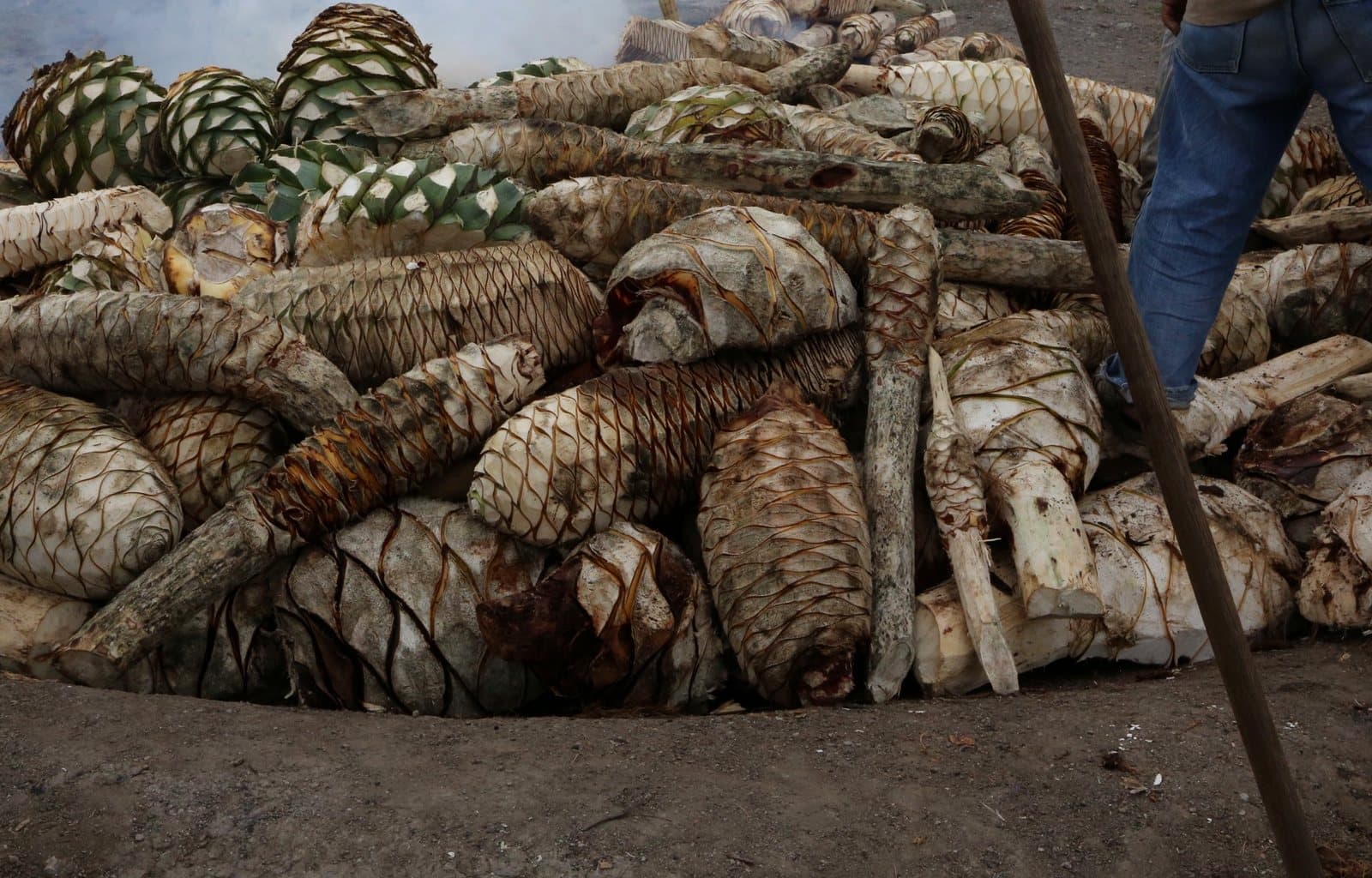
3 to 5 days
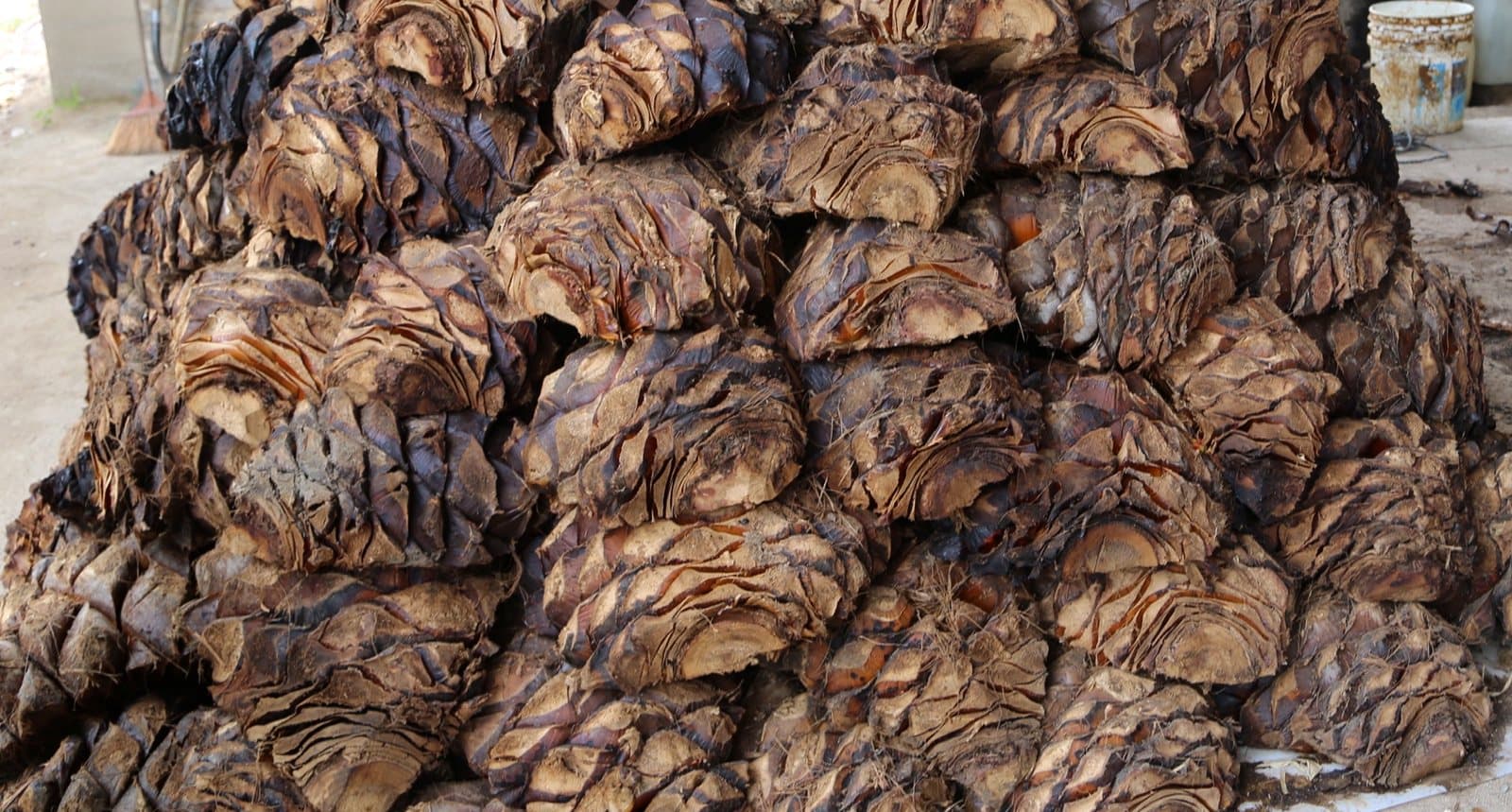
Piñas are piled into an earthen pit, on top of stones heated for hours by a wood fire. Tequila is usually steamed instead, which is the first big difference between the two.
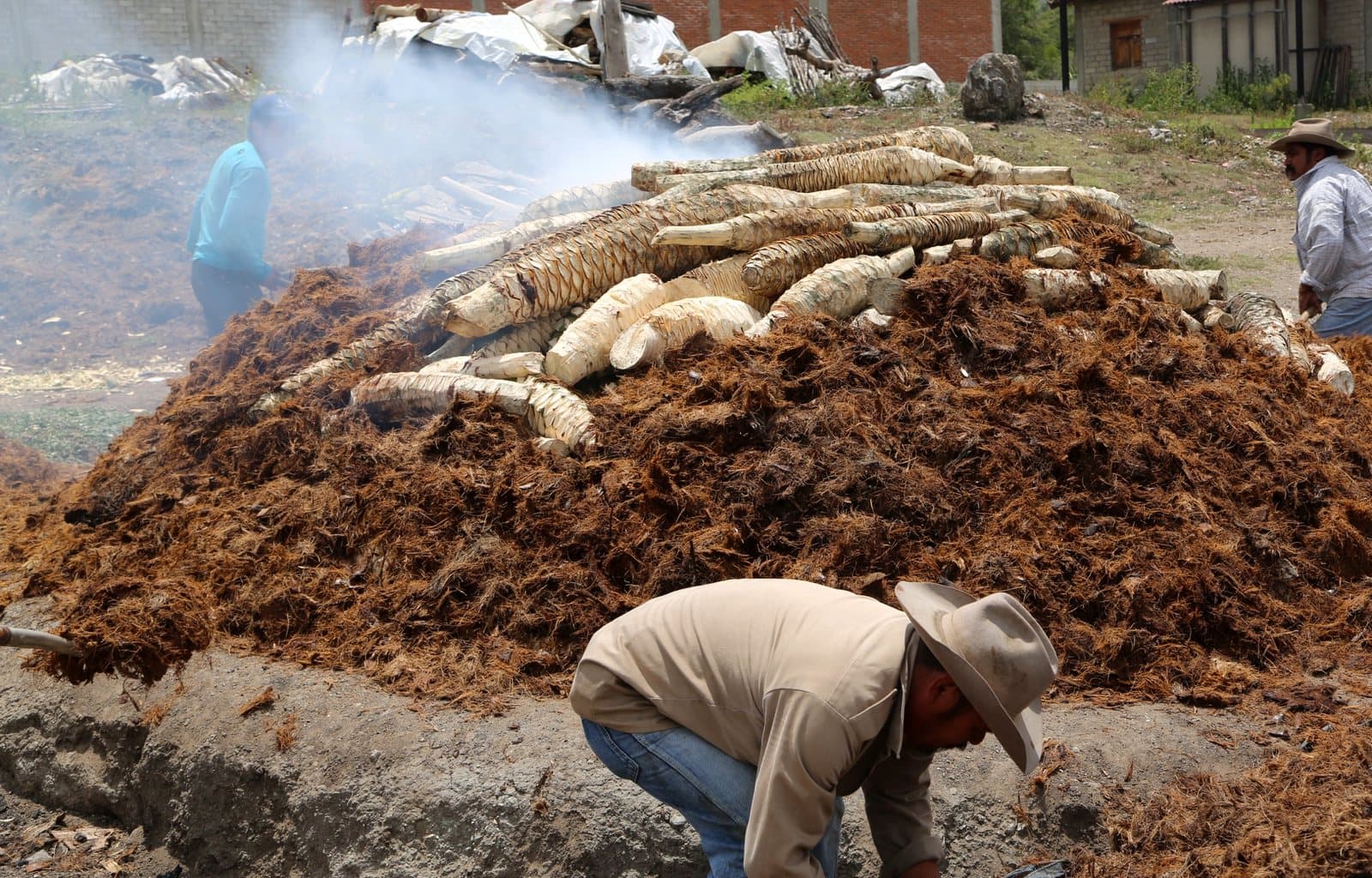
The pile is covered with agave fiber and earth and left to cook slowly underground. The roast turns starch to sugar, and the smoke it soaks up is the smoke you taste in the glass.
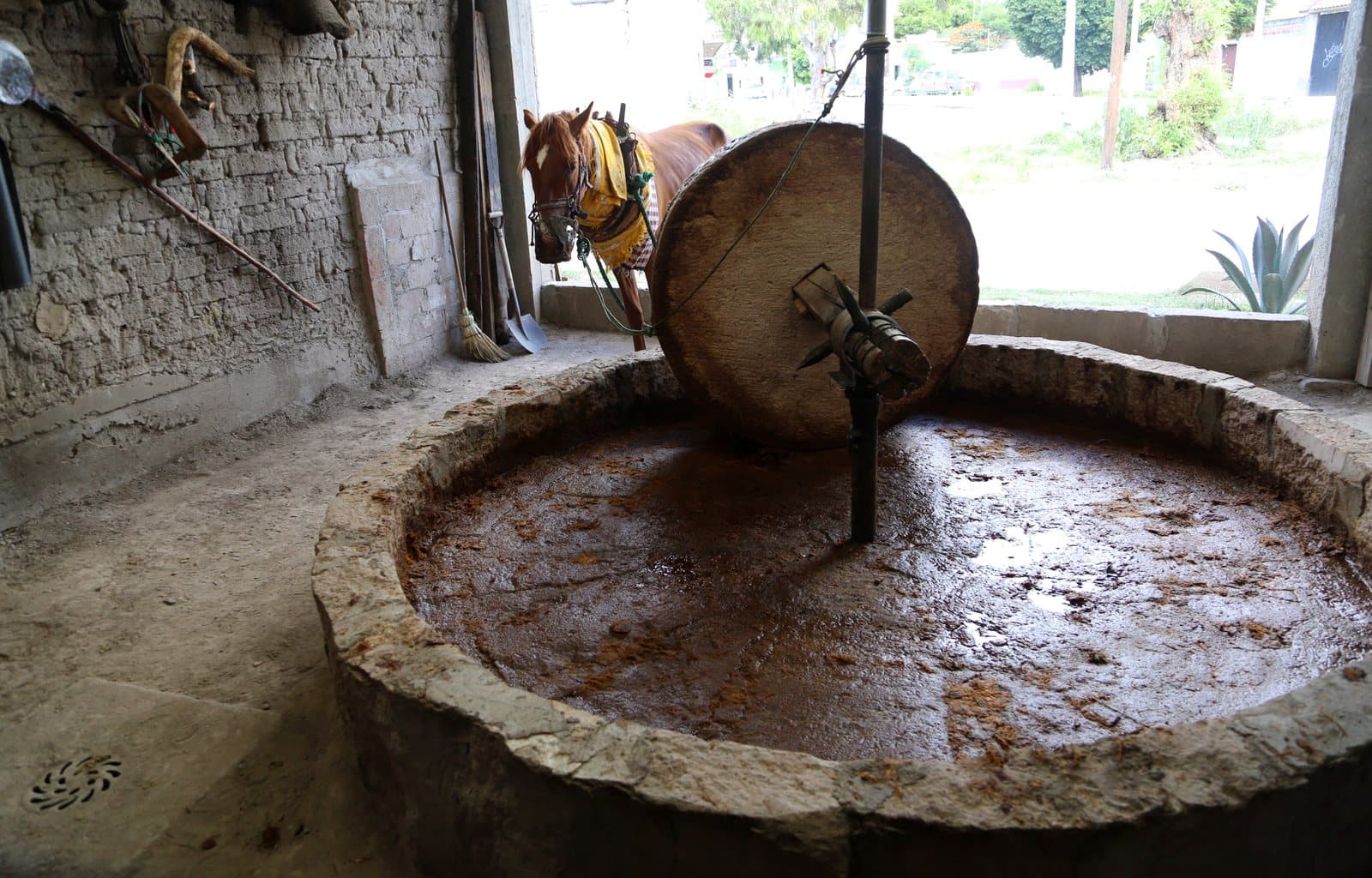
1 to 2 days
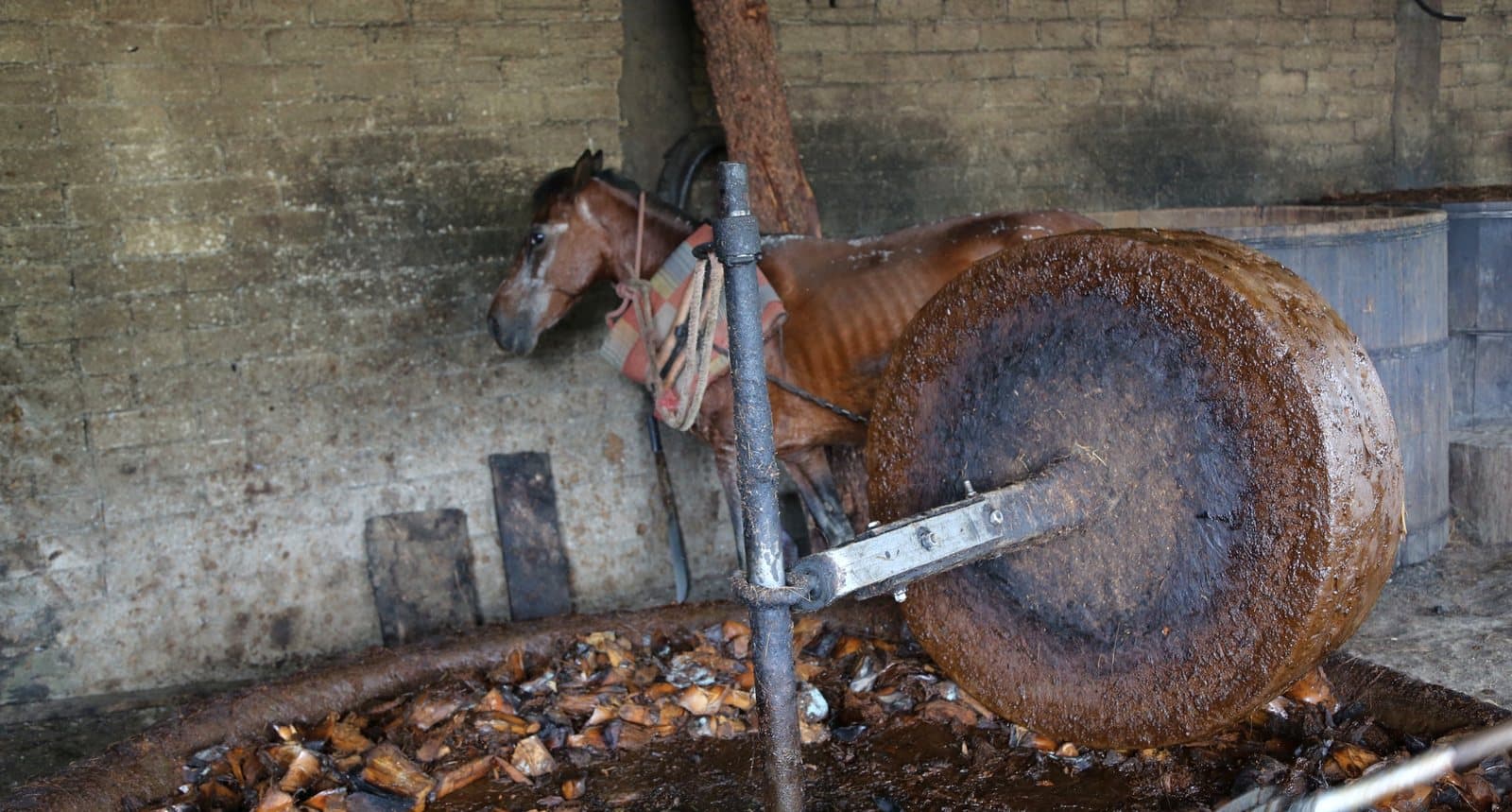
The cooked agave is crushed under the tahona, a stone wheel pulled by a horse or mule. Slower than a machine, but juice and fiber stay together.
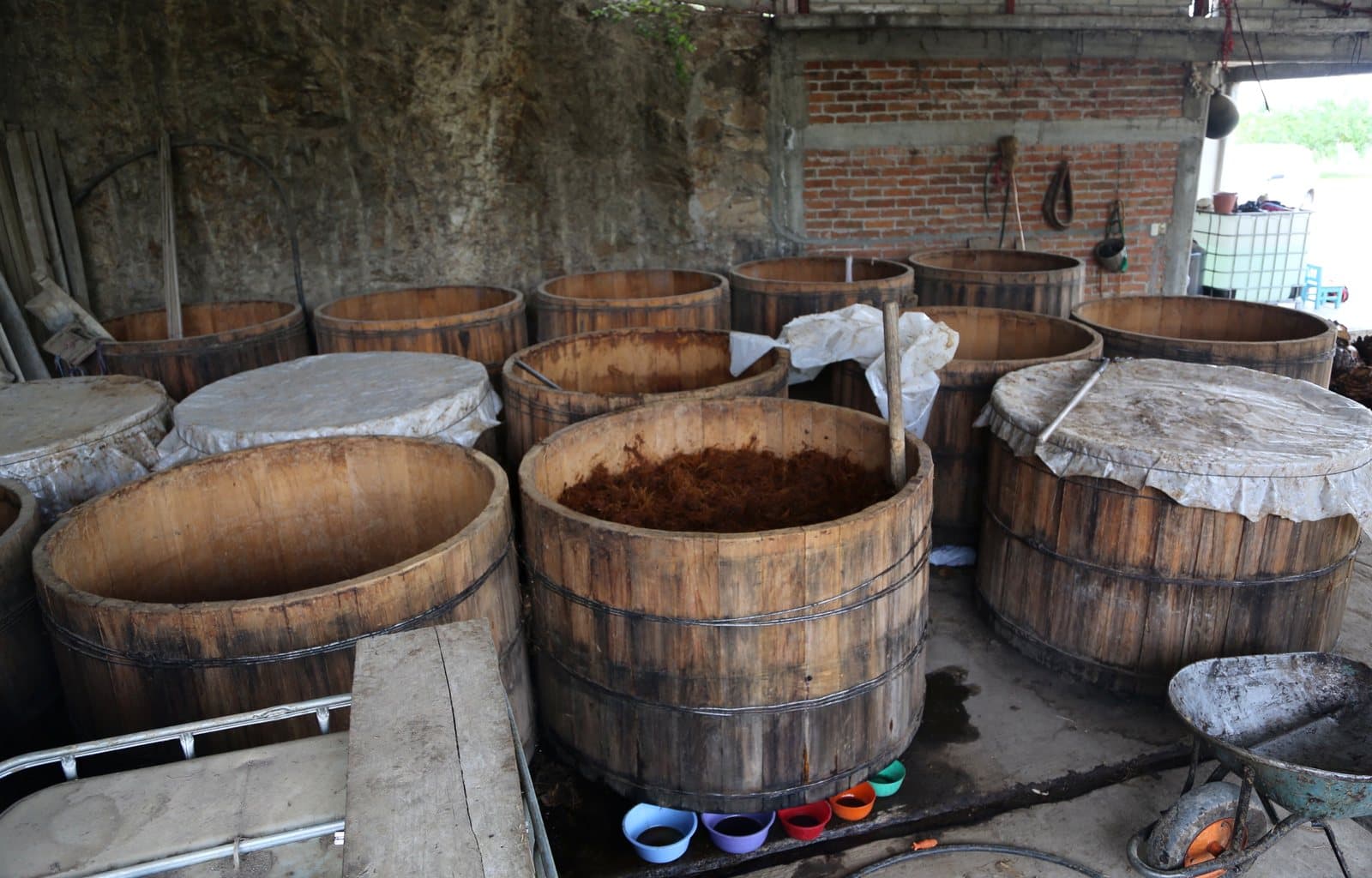
4 to 10 days
Juice, fiber and water rest in open wooden vats called tinas. Natural yeast from the air does the work and the weather sets the pace, so no two batches are identical.
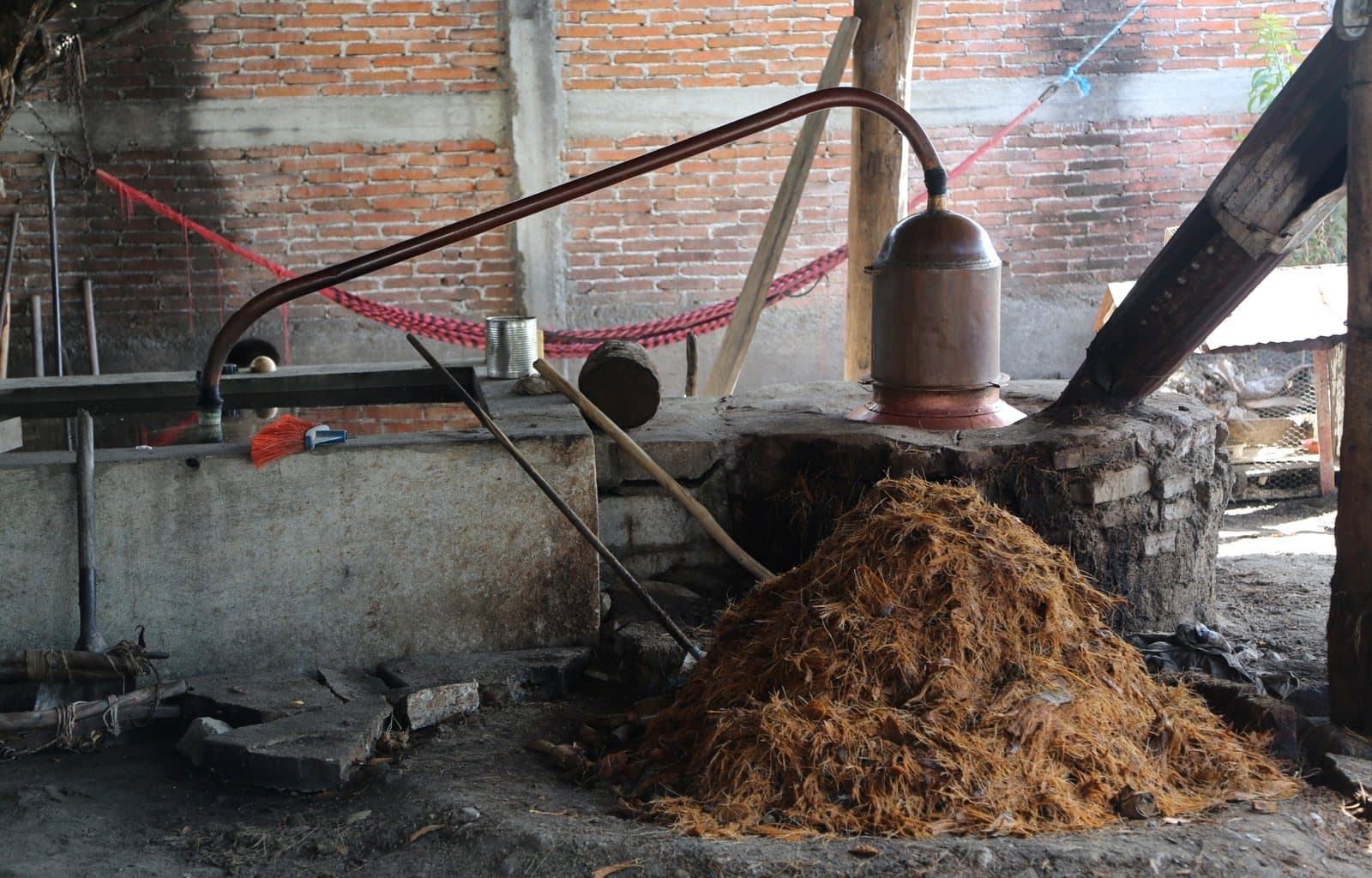
twice, 2 to 4 days
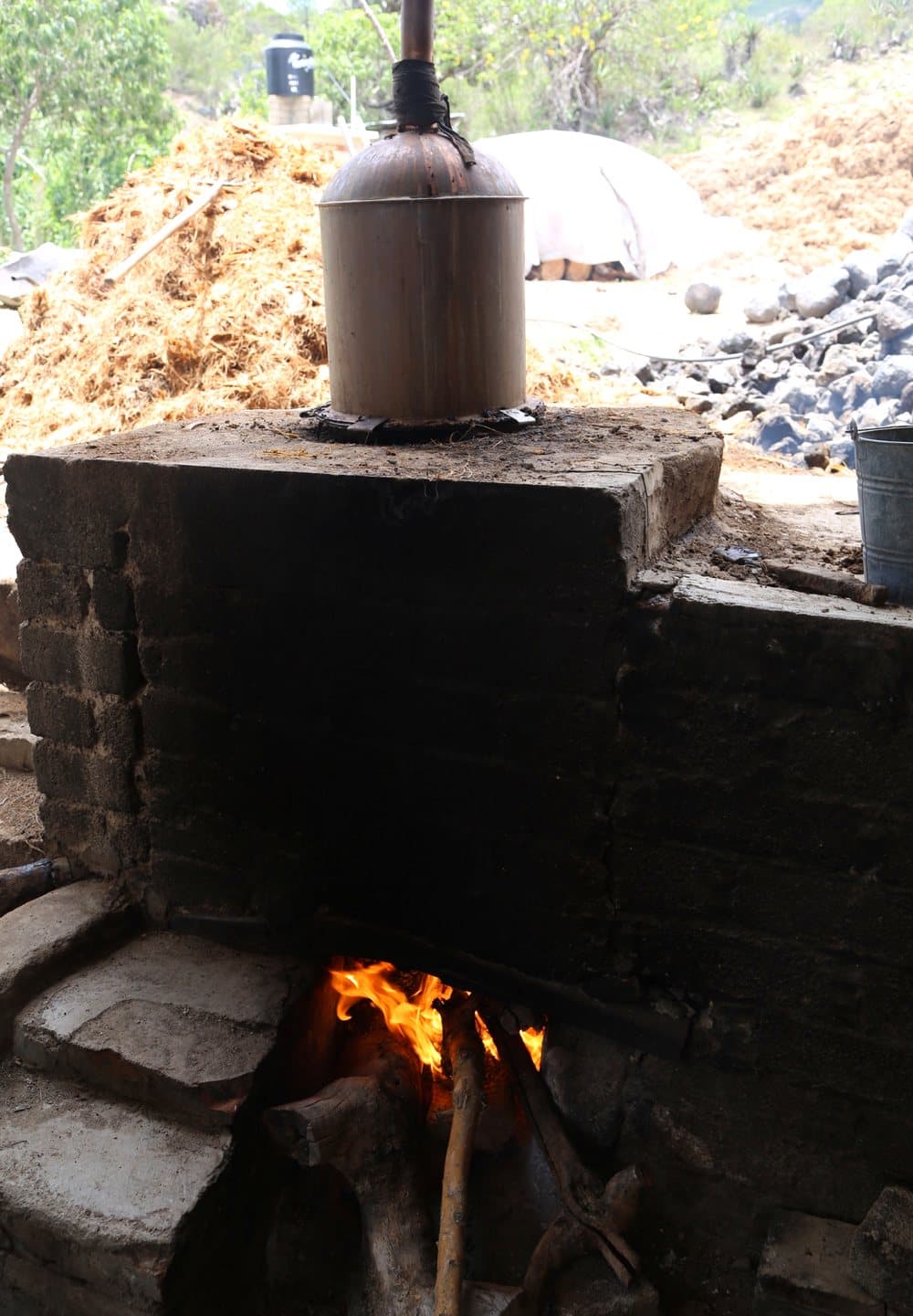
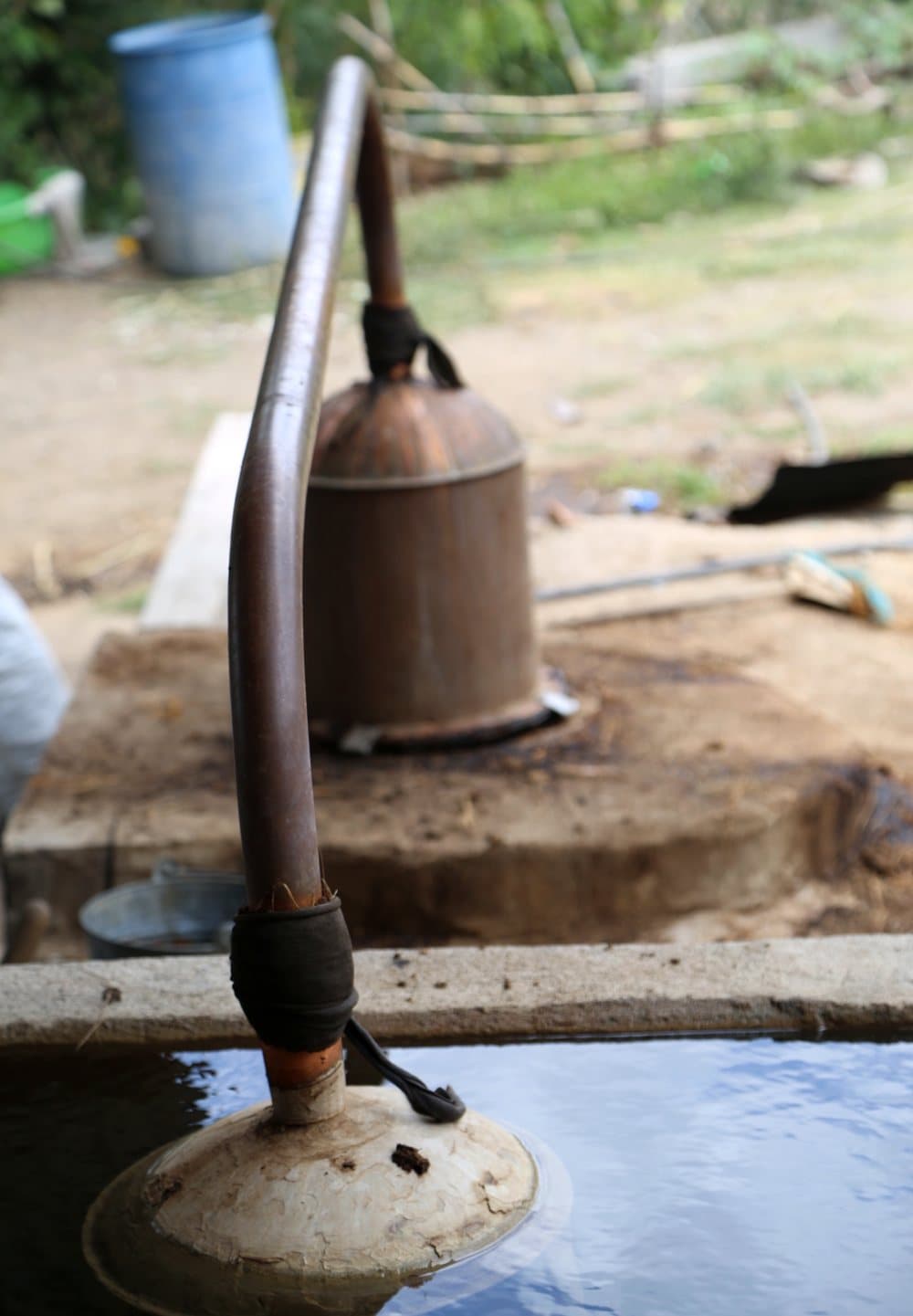
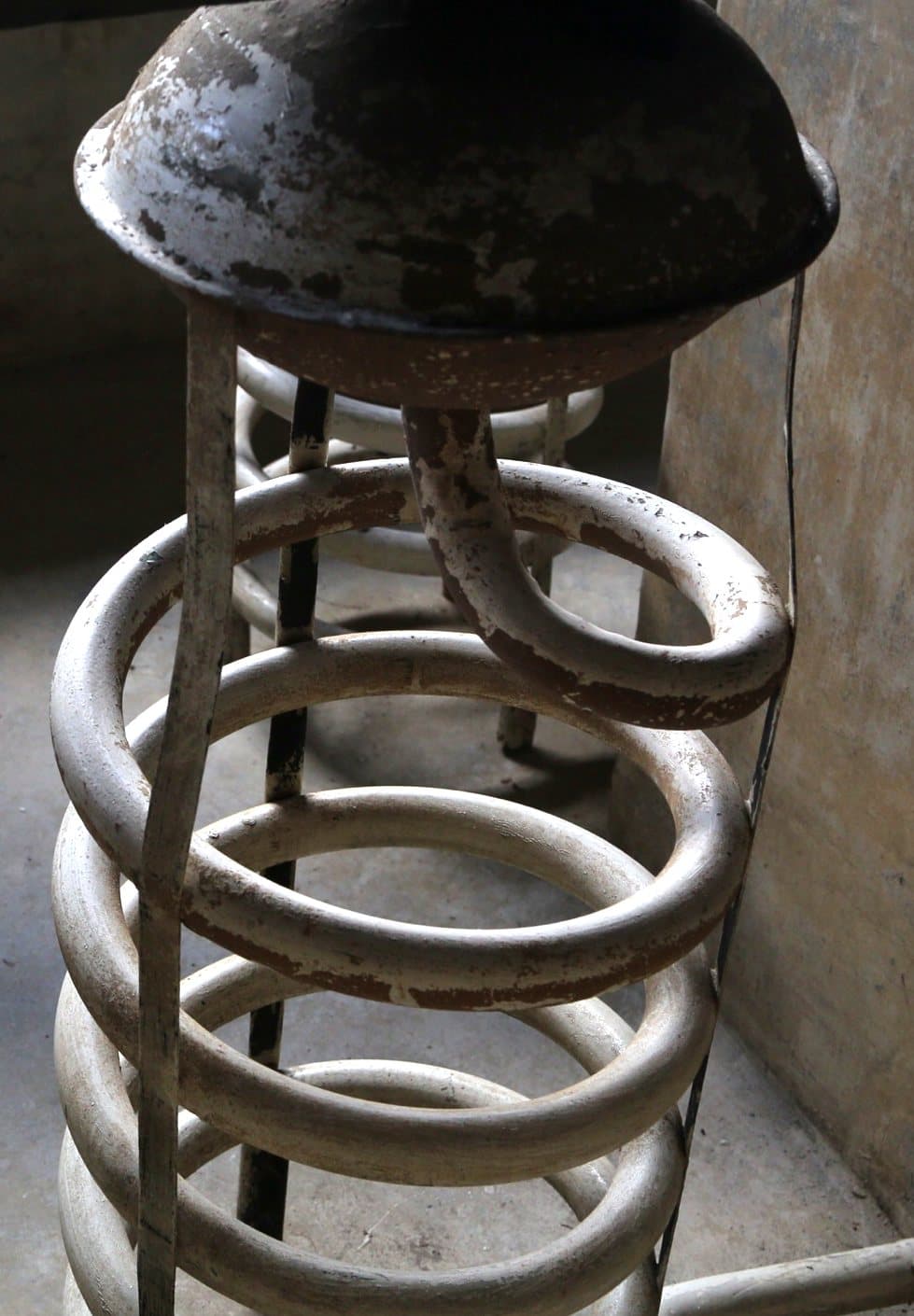
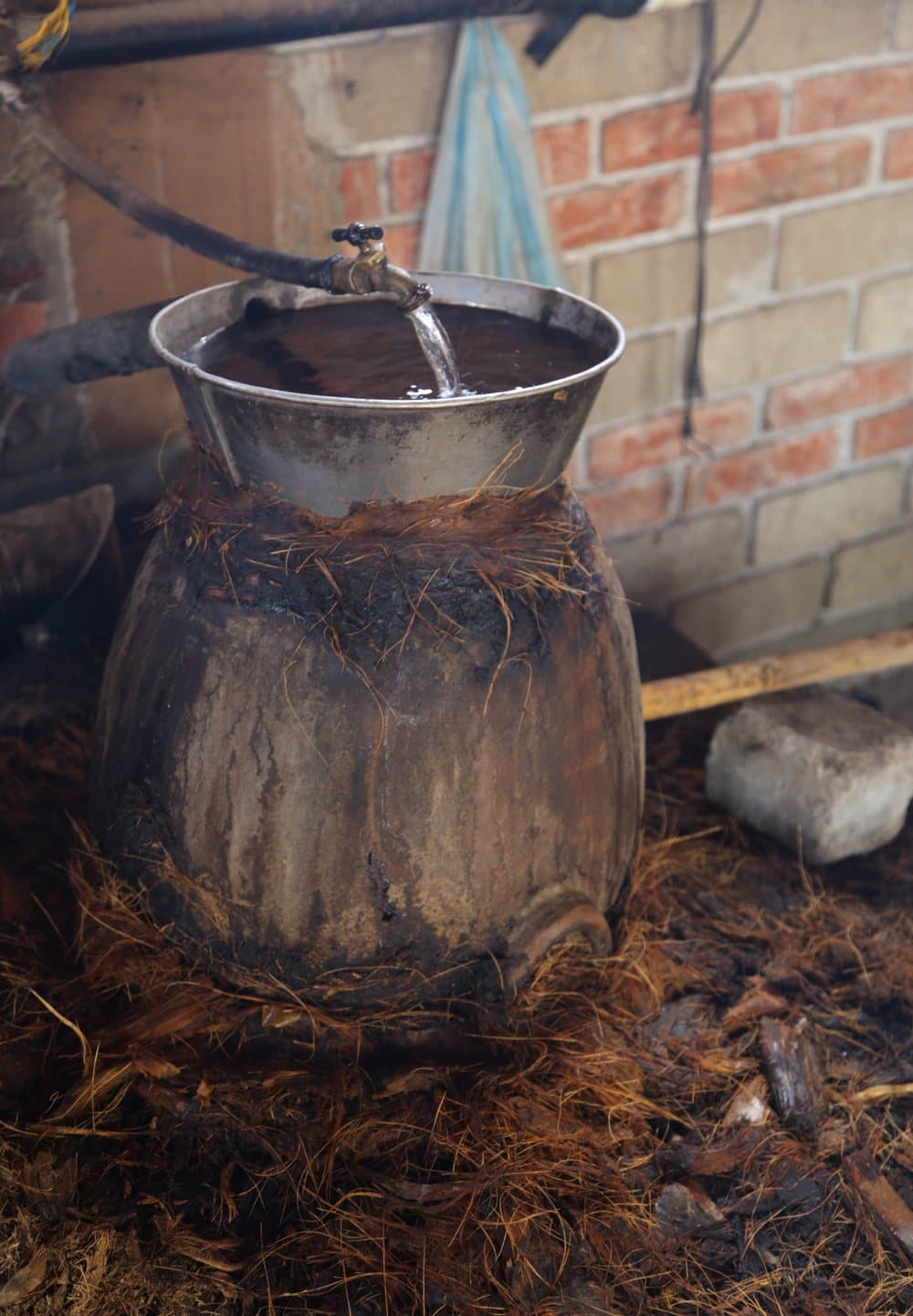
Two passes through a small copper pot still over a wood fire. The vapor travels down the long copper arm and turns back to liquid in a tank of cool water.
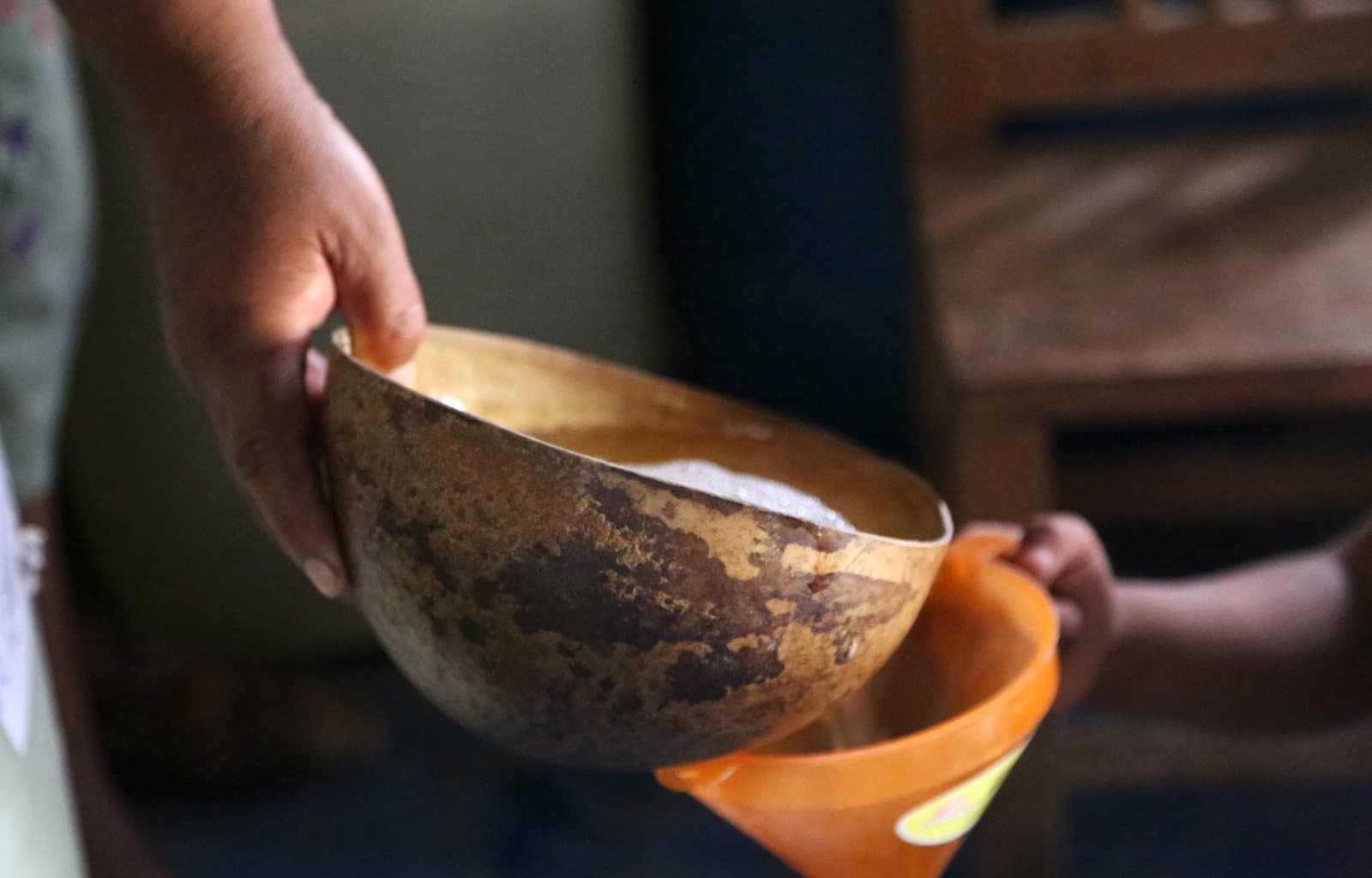
The maestro mezcalero keeps only the heart of the run. He judges its strength by the perlas, the bubbles that form when mezcal is poured from a jícara, a gourd bowl.
One batch, after the years in the field: about two to four weeks
Roast
3–5 days
Rest and mill
2–4 days
Ferment
4–10 days
Distill twice
2–4 days
Typical ranges for traditional Oaxacan production. Times change with weather, agave and batch size. Photographs show traditional mezcal production in Oaxaca.
The question everyone asks
Tequila is one branch of the mezcal family. It was once sold as vino de mezcal de Tequila: the mezcal from the town of Tequila. Today they are two protected spirits with separate rules, and they taste different for three reasons: the agave, the fire and the scale.
| Mezcal vs. tequila. | Mezcal | Tequila |
|---|---|---|
| Agave | About 40 species can be used, and it must be 100% agave. | Only Blue Weber. May be 100% agave, or “mixto” with as little as 51% agave sugars. |
| Origin | Oaxaca makes about 89%. Nine core states in the protected region. | Jalisco plus parts of four other states: 181 municipalities. |
| Cooking | Roasted in an earthen pit over wood and hot stones. This is where the smoke comes from. | Usually steamed in brick ovens or steel autoclaves. Little or no smoke. |
| Milling | Stone tahona or wooden mallet in traditional production. | Mostly mechanical roller mills. A few distilleries keep a tahona. |
| Fermenting | Open vats and natural airborne yeast, often with the agave fiber. | Mostly closed steel tanks, often with cultured yeast. |
| Distilling | Small copper or clay pot stills, one batch at a time. | Pot stills or continuous columns, at far larger scale. |
| Additives | Joven mezcal is bottled as distilled. Flavored styles must say “abocado.” | Up to 1% sweetener, color, oak extract or glycerin is allowed without label disclosure. |
| Time to grow | 6 to 35 years, depending on the agave. | About 5 to 7 years. |
| Rulebook | NOM-070, certified by COMERCAM. | NOM-006, certified by the Consejo Regulador del Tequila (CRT). |
| Taste | Smoke, earth, mineral, fruit, herbs. It changes with the agave and the village. | Cleaner and sweeter: cooked agave, citrus, pepper; vanilla when barrel-aged. |
In one sentence
“Tequila comes from one agave and is usually steamed. Mezcal can come from dozens of agaves, roasted underground over fire, so each bottle tastes of its plant and its place.”
The plant · time is the main ingredient
A grapevine gives fruit every year. An agave gives one harvest in its whole life. The longer it grows and the less it yields, the rarer the mezcal.
Years
Typical ranges from published agave guides; Mr. Mezcal figures from the producer. Wild plants vary with altitude and rainfall.
All other agaves together: 13.69%
Espadín is the farmed, everyday agave.
Cuishe and Tepeztate do not appear in COMERCAM’s top five agaves, which puts each of them under 1% of production. Source: COMERCAM, Informe Estadístico 2026 (certified production in 2025, at 45% alc. vol.).
Source: Aspectos socio-económicos del Agave-Mezcal (2024). Yields vary by batch.
Farmed or wild. Espadín is planted and sends out pups, so fields can be renewed. Tobalá grows only from seed. Tepeztate grows wild on rocky slopes and cannot be farmed at scale.
One plant, one harvest. Cutting the agave ends its life. A bottle of Tepeztate holds plants that began growing around the year 2000.
Less mezcal per plant. A ton of Tepeztate gives about half the mezcal of a ton of Espadín.
The place and the people · Tlacolula, Oaxaca
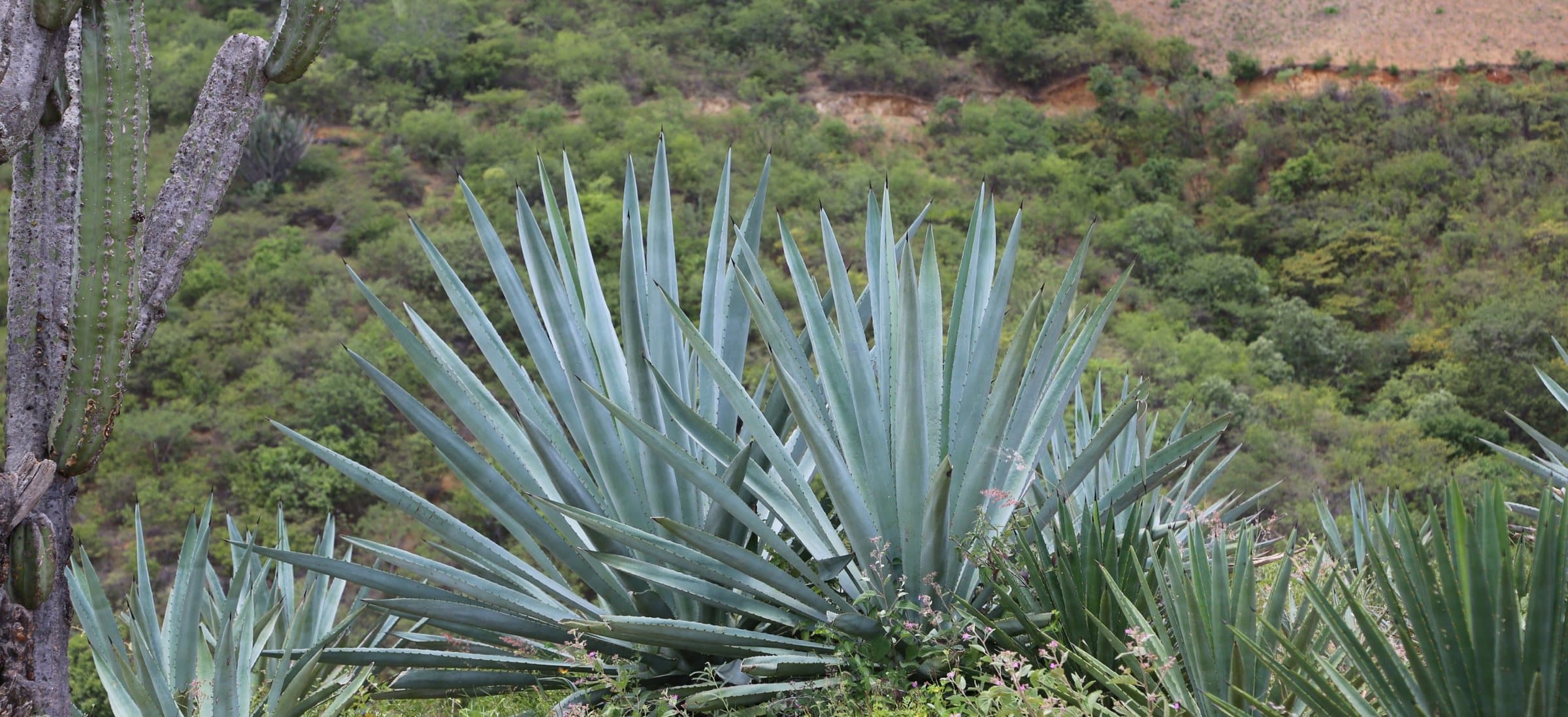
The villages. Mr. Mezcal comes from two mezcal villages in the Tlacolula district of Oaxaca: Santiago Matatlán and San Juan del Río. Oaxaca makes about nine of every ten bottles of mezcal.
The family. One family has made it for three generations. The maestros mezcaleros are Rodolfo, Silverio and Temo. The operation is small on purpose, and nothing is outsourced.
Single-source. Every bottle traces to the family and its own agave. No blending plants, no spirit bought on the open market, no industrial diffusers.
The agave. Espadín is cultivated. Tobalá and Tepeztate are wild agaves, harvested by hand in the hills.
“We are not a marketing company that found a distillery.”
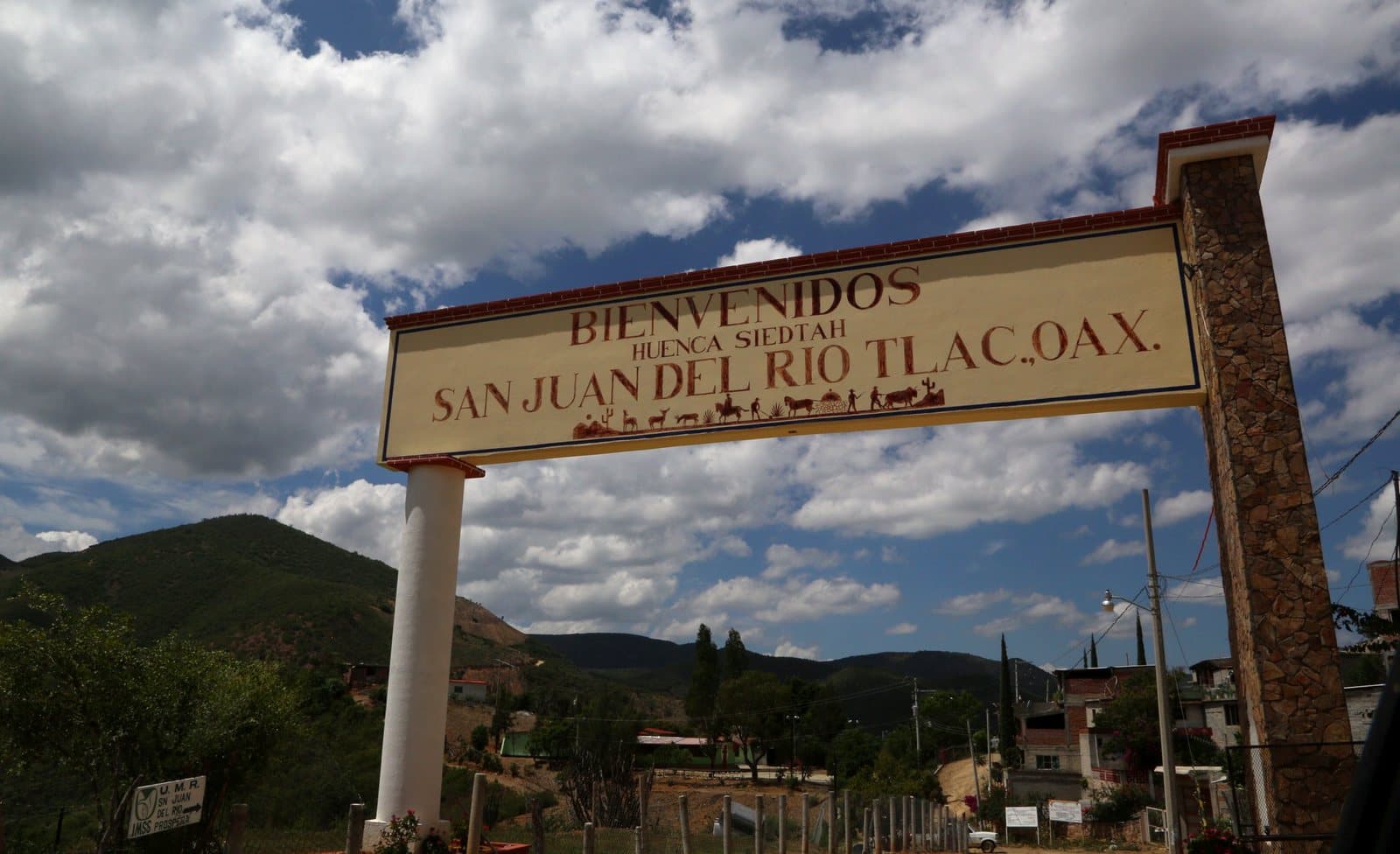
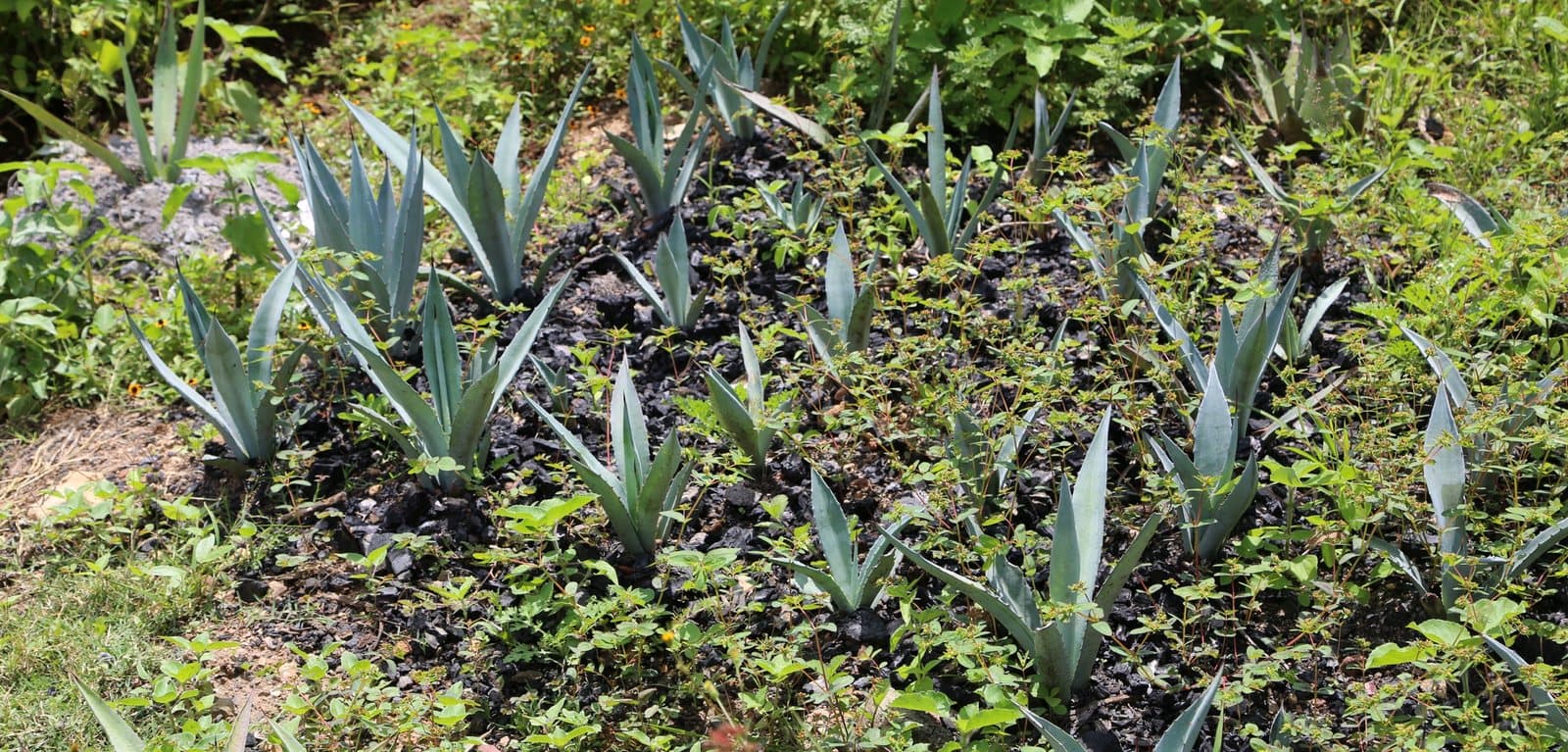
Mr. Mezcal · four single-agave expressions · joven · 42% ABV
Each is distilled from one agave variety, so the difference in the glass is the difference between plants.

The everyday classic, the bartender’s pour.
Agave angustifolia · cultivated · about 6 to 8 years
The plant
“Little sword,” named for its long, straight leaves. The most planted agave in Oaxaca and a close relative of tequila’s Blue Weber.
In the glass
Signature cocktail
Mr. Mezcal MargaritaSmall, wild, and the judges’ favorite.
Agave potatorum · wild · about 10 to 15 years
The plant
A small, broad-leafed agave of the high, rocky hills. It makes no pups: every plant starts from a seed. Only 1.78% of certified mezcal is Tobalá.
In the glass
Signature cocktail
Flor de Tobalá (honey and lemon)Recognition
Best Mezcal, Platinum 96/100. Las Vegas Global Spirit Awards 2023.

Eighteen years in the field before the fire.
Agave karwinskii · 18 years to maturity
The plant
Tall and slender, with a woody trunk and a crown of narrow leaves, like a small palm. The trunk is the piña. It gives a dry, mineral mezcal.
In the glass
Signature cocktail
Cuishe Cucumber CoolerThe rarest pour, decades in the making.
Agave marmorata · wild · 25+ years
The plant
A big wild agave with broad, wavy leaves that clings to steep, rocky slopes. It cannot be farmed at scale and yields about half the mezcal of Espadín.
In the glass
Signature cocktail
Mango Silvestre (mango and lime)Recognition
Gold Medal, The Fifty Best, New York 2026. Tasted blind.
The authorities · the law behind the label
Mezcal is a protected name, like Champagne or Scotch. Three things stand behind every certified bottle.
Denomination of Origin (DO)
Since 1994, only spirit from the protected region may be called mezcal. Nine core states: Oaxaca, Guerrero, Durango, San Luis Potosí, Zacatecas, Guanajuato, Tamaulipas, Michoacán and Puebla. Parts of a few more states were added from 2018 and have been contested in court. The name belongs to the Mexican state, through IMPI.
NOM-070-SCFI-2016
The official rulebook, in force since 2017. It requires 100% agave, sets alcohol at 35 to 55%, defines three categories and six classes, and says what every label must show.
COMERCAM (the CRM)
The Consejo Mexicano Regulador de la Calidad del Mezcal, founded in 1997. It inspects palenques, certifies batches and publishes the industry’s yearly statistics. Look for the NOM number on the label.
| Three categories, defined by how the mezcal is made | MezcalModern methods allowed | Mezcal ArtesanalTraditional · Mr. Mezcal | Mezcal AncestralThe oldest methods only |
|---|---|---|---|
| Cooking | Pit oven, masonry oven or autoclave | Pit oven or raised masonry oven | Pit oven only |
| Milling | Tahona, mill, shredder, roller mill or diffuser | Mallet, tahona, Chilean or Egyptian mill, or shredder | Mallet, tahona, Chilean or Egyptian mill |
| Fermenting | Wood, masonry or stainless steel tanks | Stone, earth, tree trunk, masonry, wood, clay or animal hide | The same vessels as artesanal |
| Distilling | Pot stills or continuous columns, in copper or stainless steel | Direct fire, in a copper pot still or a clay pot | Direct fire, in a clay pot with a clay or wood cap |
Mr. Mezcal is certified Mezcal Artesanal, the category that covered 91% of certified mezcal in 2025. At each step it uses the most traditional option: pit oven, tahona, open wooden vats and copper stills.
What is in the bottle
Agave and water are the only raw materials.
Nothing is added to sweeten, color, flavor or change the texture.
The family farms its own fields, and the wild agaves grow on their own in the hills.
Roasted in an earthen pit, crushed by tahona, fermented in open wooden vats, distilled twice in copper.
Every bottle traces to the family that made it. No bought-in spirit and no blending plants.
It is joven, so what you taste is the agave and not a barrel.
Mezcal is a spirit, bottled here at 42% ABV, and it is made to be sipped slowly. We make no health claims about it.
At the table
Mezcal shows itself in the glass. A small, unhurried pour does more than any description.
Pour small. Half an ounce, neat, at room temperature. No ice, no lime, no shot glass.
Look. Swirl the glass and watch the “pearls,” the bubbles that show its strength.
Smell twice. Lips slightly apart. The first sniff is alcohol; the second is the agave.
Kiss it. Mezcal is sipped in “besitos,” little kisses. The first sip wakes the mouth, the second shows the flavor.
Take your time. Notice how the flavor changes between the first sip and the last.
Espadín
round
Tobalá
floral
Cuishe
dry
Tepeztate
intense
From lightest to most intense, so every glass can still be heard.
The three rare expressions show best neat.
See all cocktails →The vocabulary
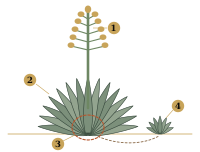
Quiote: the flower stalk
Penca: a leaf
Piña: the heart
Hijuelo: a pup
Fire heats the fermented mash in the pot. The alcohol turns to vapor, rises into the cap and runs down the arm to a coil cooled by water, where it becomes liquid again. Doing this twice concentrates and cleans the spirit.
Sources and further reading
About the numbers. Statistics are the latest published as of October 2026. Agave ages and process times are typical ranges and vary by batch. Photographs show traditional mezcal production in Oaxaca.
Four agaves, four flavors, one family.